
Downloading Fired at Low Heat
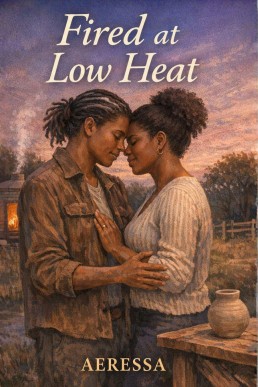
"The bowl had been sitting here for almost four months." Sable knows it. They stand in front of it most mornings—this wide, asymmetric form that came off the wheel better than anything they've made in years—and they leave it untouched. The gallery deadline has slipped once. It will slip again. The piece is ready. Sable is not.
At the Clearwater Land Trust, a fourteen-acre queer intentional community in late spring, life has a texture that took years to build. Sable, a ceramicist, has spent seven years here alongside their partner Mira—seven years of community dinners, of walking the same property paths in the same dark, of a shared language so fluent it has stopped needing words. They are happy. They are certain of this. They have been certain of it for four years, since a February morning they have never spoken of directly.
Mira is the warmth in every room she enters. She knows where things are kept, who needs refilling, which conversations are about to turn difficult. She has been fine since February. She has been so thoroughly, convincingly fine that she has lived inside it—believed in it herself—while something else waited in a sealed room she stopped checking.
When Fen Calloway arrives as a trial resident—a writer, quiet in the way of someone who has recently stopped being as careful—the land trust reorganizes itself around him the way it always does with new presences: gradually, almost geologically. He is not a disruption. He does not arrive as a catalyst. He simply asks, one warm evening on the community hall's back steps, a question that lands differently from anything that has been asked in years: Do you two ever talk about what you want?
Not what you need. Not what is wrong. Want.
Fired at Low Heat is a novel about the things we carry alone inside a shared life: the grief we manage into something smaller than it is, the language we develop to stay close without touching the hard places, and the particular courage it takes—after years of carefully performed okayness—to let someone see what we actually are. Told in alternating close perspectives, it is a love story not about falling but about return: two people who chose each other, built something real, and must now choose each other again in the full knowledge of what that costs.
For readers who believe the quietest rooms hold the heaviest things.