
Downloading All Debts Not Yet Called In
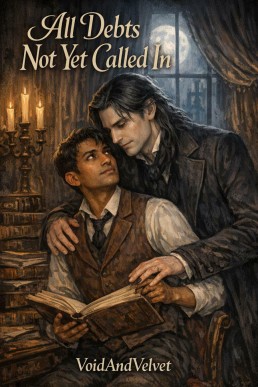
"Someone has been extremely careful here." Simon Alcott writes these words in the margin of a ledger — not knowing he is already being watched, already being known, already the subject of a century-old attention that has been waiting, with extraordinary patience, for exactly the kind of mind that notices.
When the firm of actuaries sends their fourth man to Ashvere House, Simon arrives with one instruction and a professional habit: count everything. He counts the tiles in the entrance hall before he removes his coat. He counts the candles in the chandelier. He catalogues the eighty-three boxes of estate records — one hundred years of accounts, meticulously organized, maintained by a hand both brilliant and strange — and notes, immediately, that the box for 1799 is missing.
Lord Caelum Vael is unlike any client Simon has encountered. Pale, cold-handed, nocturnal, reading documents in medieval Flemish at eleven o'clock at night in the records room — and extending to Simon, without announcement or ceremony, a quality of attention that Simon has never in thirty-two years been offered: the quality of being seen precisely as he is, and found acceptable. The books Simon needed appear on the shelf before he asks. His breakfast arrives at the hour that suits him, not the household. The east corridor lamp, broken for weeks, is quietly repaired.
Simon begins to keep a second notebook — labeled Miscellaneous, then quietly relabeled in his own mind — cataloguing not the estate accounts but the man across the long worktable. Seventeen types of silence. Three instances of laughter. The way the composure works, and what is underneath it. The shape of something he has no professional category for, accumulating entry by entry across forty-seven pages.
But the records themselves are speaking. In the margins of a century of ledgers, Simon finds a trail left by another actuary who came before him — careful, precise annotations that stop without warning in October 1877. He finds a gap where 1799 should be. He finds evidence of something that has been circling the house at night for longer than living memory. And he finds, documented in fifty-three entries across one hundred years, a portrait of the man who employs him: a century of specific, quiet, uncategorized care given to people in need — not from charity, but from genuine knowledge of who they were and what they actually required.
"Persons — Ongoing Care," Simon names the subcategory, when he finally has enough evidence to name it. He does not yet know he is building toward the eighty-fourth entry.
All Debts Not Yet Called In is a slow, precise, deeply felt love story set in gaslit Victorian London — between a methodical actuary learning to trust the evidence of his own heart, and an immortal lord of an ancient estate who has spent two centuries deciding that love was best practiced at a careful distance. It is a story about the courage required to let someone know you fully, and about the particular mathematics of a feeling that does not fit any existing category: the kind that is not charity, not transaction, not investment — but ongoing care, freely given, for as long as the person continues.
What happens when a man who counts everything falls for a man who has been counting him since January?